A hot-feed leak affecting neighbouring flats
An anonymised investigation by ADI Leak Detection. A building manager showed the engineer water dripping through a bedroom ceiling in one flat. Another flat had already been investigated by a plumber. The recorded visit involved more than one dwelling; it does not establish that a managing agency commissioned the work.
Following the evidence across the flats
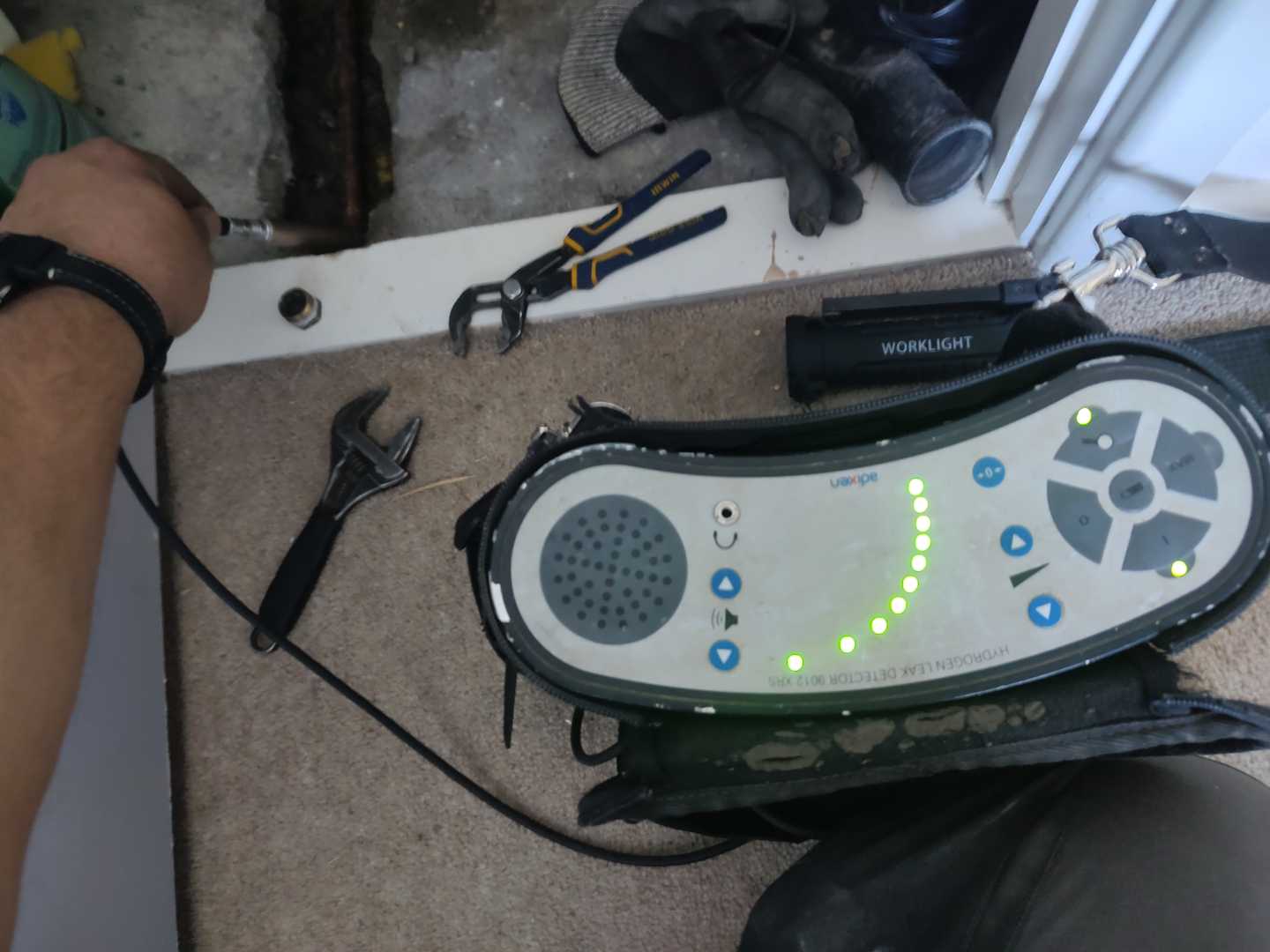
A damp survey found high readings beneath the bath, on a bedroom carpet and beneath the boiler. The cold feed passed its pressure test, while the hot feed failed. Tracer gas helped localise the suspected leak beneath the boiler.
Repair confirmed; drying still needed
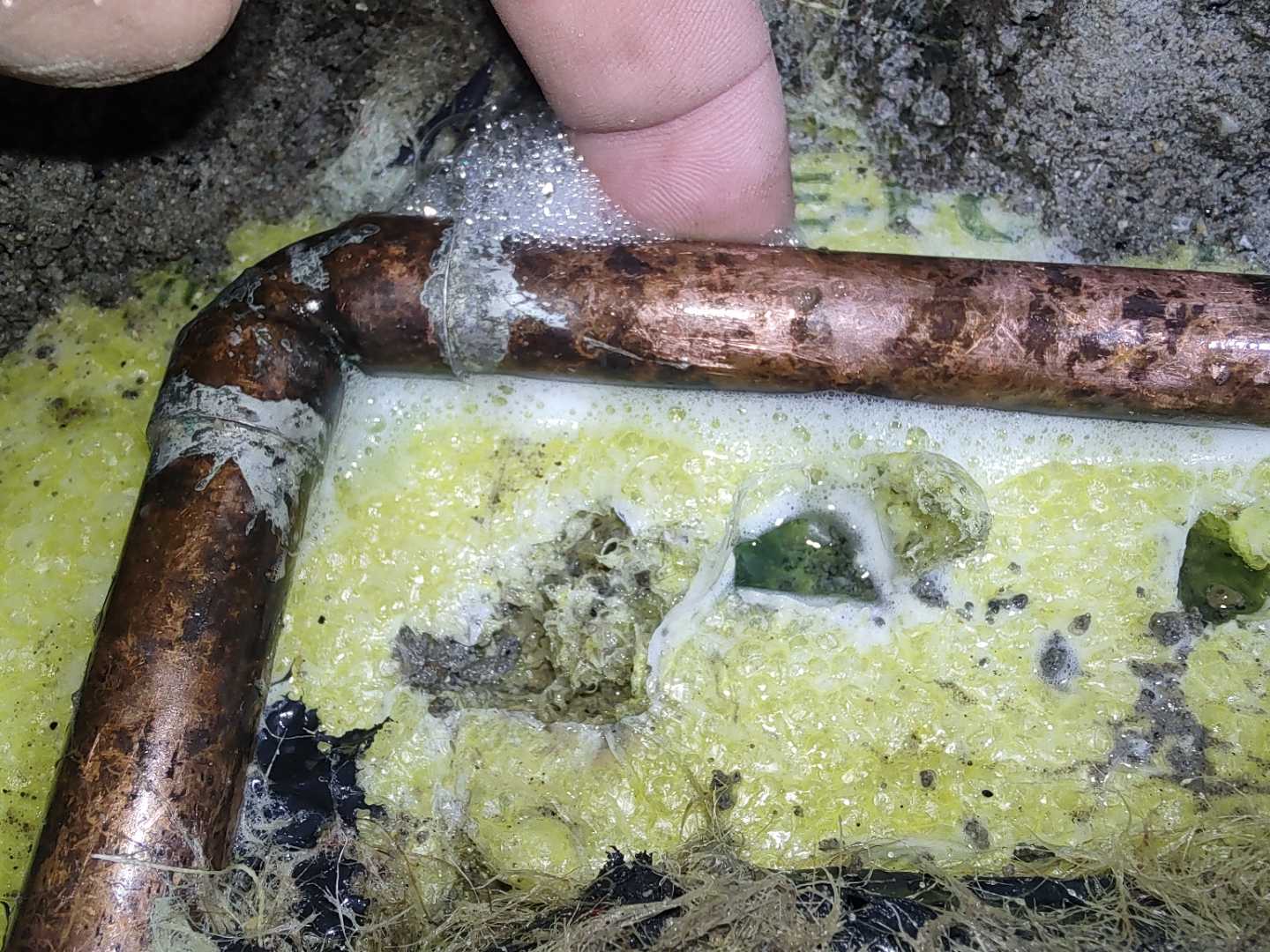
The engineer lifted the carpet and opened the concrete floor, exposing a leak in a 15 mm copper pipe. The leaking section was replaced with new copper pipe and fittings. The hot feed then passed a pressure retest, with no further leak indicated at the time of testing.
The report recommended leaving the opened surfaces exposed for drying. The completed pipe repair is not evidence of completed drying or reinstatement, and this investigation did involve opening the floor.
What a block manager can take from this
Coordinate access to the affected flats, keep each observation tied to its location, and record the repair and follow-on drying separately. Prepare resident access and see how findings and outstanding actions belong in a report.
Other ADI investigations
The following published examples illustrate investigation decisions. They are not presented as block-management commissions.
Concealed heating pipework in Bollington
ADI reports tracing a heating-system pressure loss to a tee joint below a kitchen floor. Thermal, moisture and acoustic observations were followed by pressure testing. The joint was exposed and repaired.
Source: ADI’s published Bollington investigation. For managers, the useful lesson is to retain the evidence linking a suspected location to the fault actually exposed.
Continuous water use in Derby
ADI’s investigation identified a running urinal flushing control and a dripping tap rather than a hidden pipe leak. The reported checks included isolation, visual inspection and pressure testing.
Source: ADI’s published Derby investigation. Continuous meter movement deserves investigation; it does not establish a buried-pipe fault by itself.
An underground supply in Wallasey
ADI reports locating a leaking underground main in a back garden, followed by excavation and repair.
Source: ADI’s published Wallasey investigation. Agree access, excavation and reinstatement responsibilities separately for the property being investigated.
Apply the evidence to your building
Each case concerns its own property and survey conditions. A communal riser, shared main or multi-flat instruction may need a different scope. View the illustrative report format and prepare the details for your call.