Moisture mapping across the affected flats
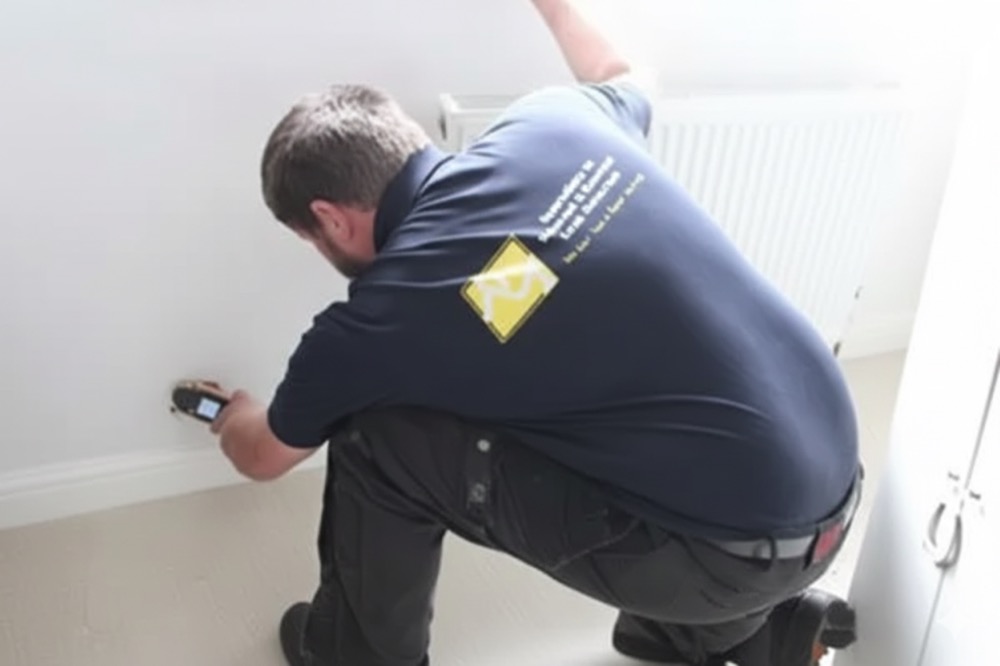
Readings taken in each home show how far water has travelled and whether the wet area is still spreading, which narrows down where access is worth arranging. A reading is not a drying sign-off.
For managing agents and RMC or RTM directors with blocks across Greater London. Describe the leak, shared pipework and affected homes, and identify who can authorise access before arranging the investigation.

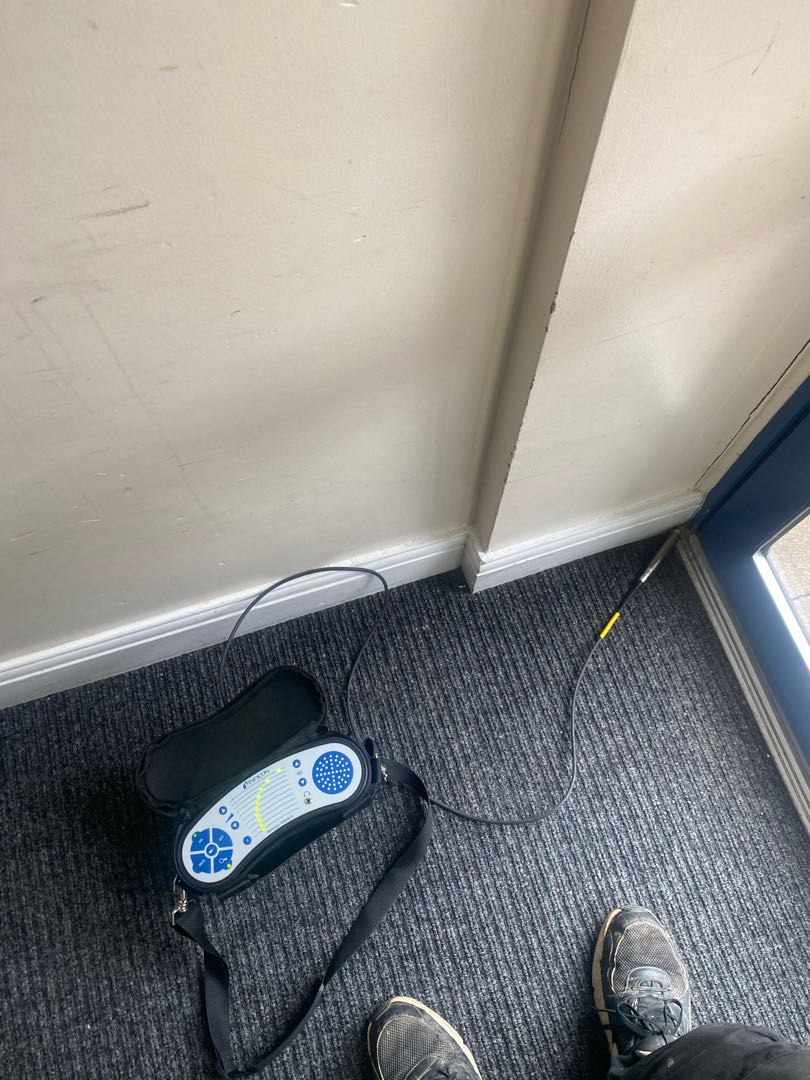
A managing agent arranged an investigation for a London block of flats after concerns about water use. The meter kept moving and a pressure test on the mains lost pressure immediately. Tracer gas gave a strong reading around the incoming supply and a service cupboard.
The engineer could not tell whether the indication marked a nearby fault or gas travelling through ducting. A strong car-park reading occurred once but could not be repeated, and acoustic checks did not pinpoint the leak. Further opening-up or a new mains route was proposed for consideration; the visit did not establish an exact fault location or include a repair.
This list describes types of property only.
A leak in a block may show first as a stain in one flat. The source can be a neighbour’s pipework, a shared riser or the supply running under the car park, and each of those needs a different survey.
The building decides the method. Shared pipework, several occupied homes and a supply that may run beneath the car park all shape what can be tested, and when.
Readings taken in each home show how far water has travelled and whether the wet area is still spreading, which narrows down where access is worth arranging. A reading is not a drying sign-off.
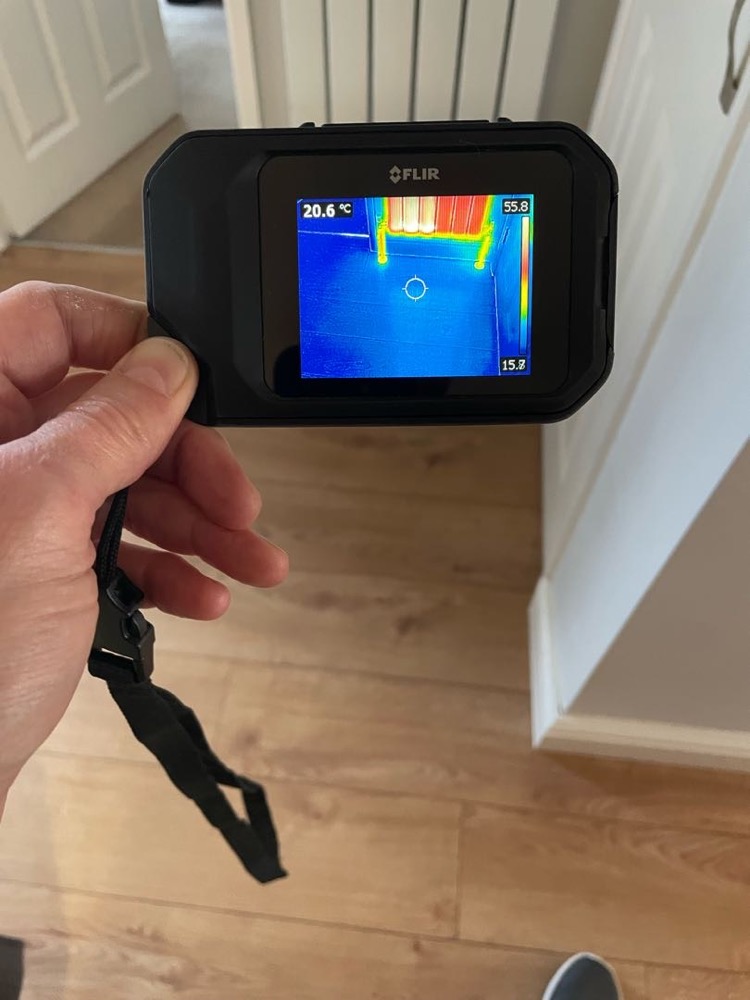
A hot-water or heating leak can leave a temperature difference readable through a ceiling or boxing without stripping it out. It shows surface patterns rather than what sits behind the wall.
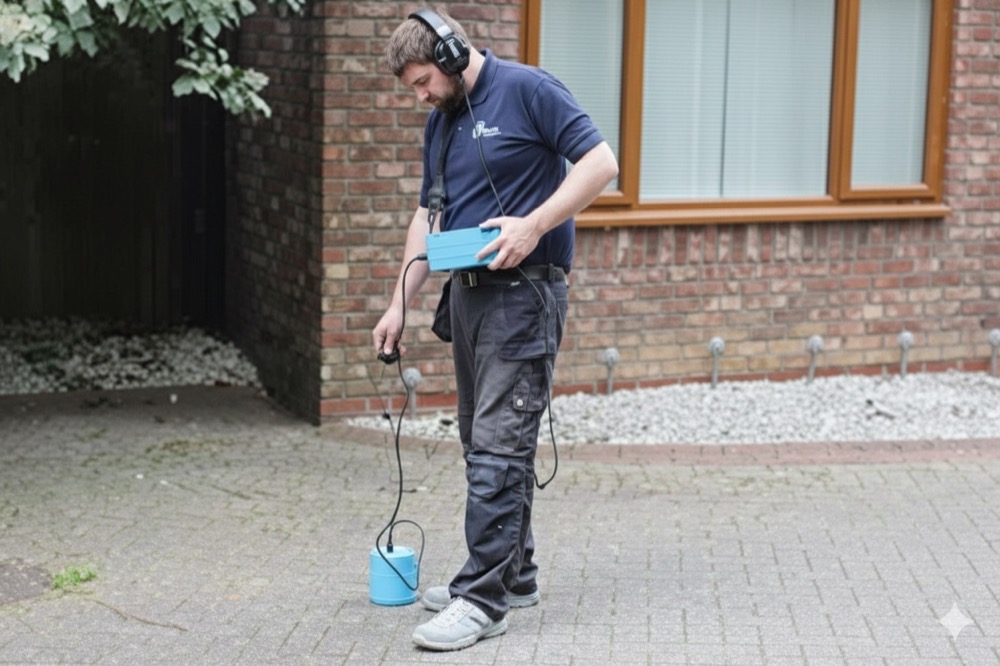
Where the supply runs under a car park, a drive or landscaped grounds, escaping water can be heard from the surface, and two points compared to estimate the position. On the investigation above a strong car-park reading occurred once and could not be repeated.
Introduced under controlled conditions and detected where it surfaces. In a block it can also travel through ducting and service voids, so an indication has to be separated from a confirmed location, which is exactly what the visit above could not settle.
An isolated section either holds pressure or it does not, which separates a leaking riser or supply from a sound one. A failed test does not pinpoint the fault.
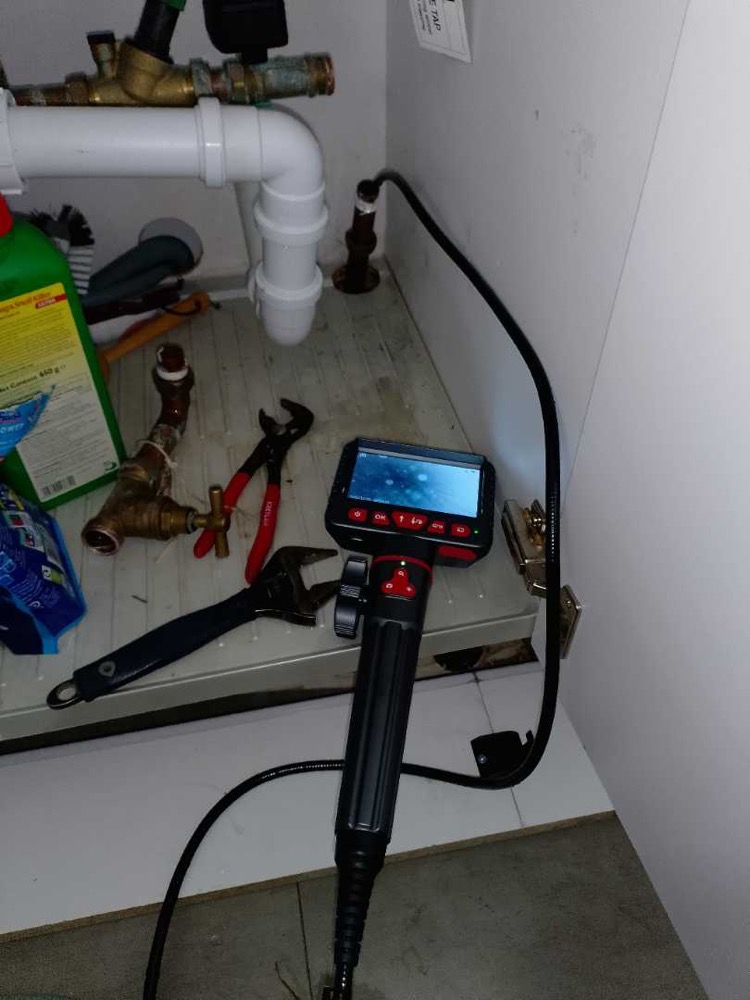
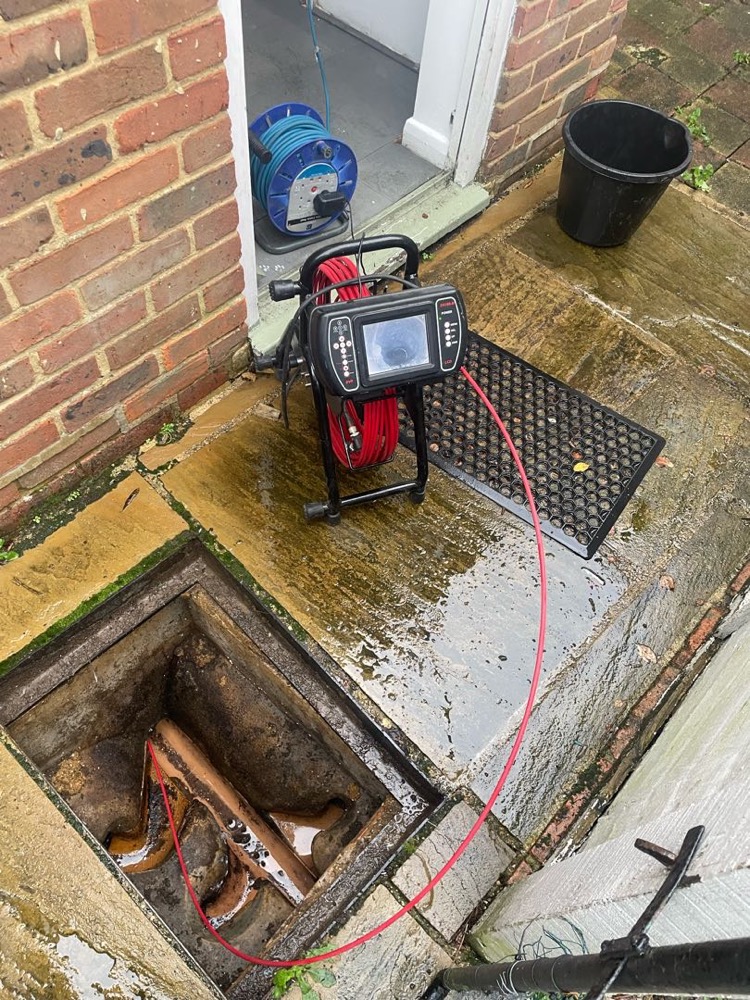
An endoscope looks into boxing or a ceiling void through a small opening, and a drain camera surveys a chamber from the inside, which separates a drainage fault from a leak on the supply.
Sources reviewed 18 September 2026: OS: ceremonial county boundary; DfE GIAS: postal-town examples from the 3 September 2026 extract, filtered to the 32 boroughs. Place names are postal-town examples from scoped address records, not borough boundaries. Thames Water service-area distinction; Shared supply pipes.
The attending engineer prepares the investigation report: the areas accessed, what was found and what still needs checking.
Use it to brief a repair contractor, update residents and give an insurer the evidence.
Read the illustrative sample report Illustrative report
Observed findings
Separate readings and visible evidence from interpretation.
Next steps
State what needs checking, who should arrange it and what remains uncertain.
Selected excerpts from five-star reviews of ADI’s wider service across the UK.
Rated 5 out of 5
Having a leak under the floor is never pleasant but ADI have been as good as you could ask for.
Rated 5 out of 5
Robert was hardworking, incredibly knowledgeable, and talked though everything he was doing.
This page follows the ceremonial county of Greater London: the 32 London boroughs, including Westminster, but excluding the separate City of London. The places listed are examples within Greater London, not a complete list or a record of past jobs. Call with the full postcode to discuss the property and current availability.
Record the affected rooms, when the water appears and any recent work on the pipework. Agree access with occupiers and the managing agent, including shared service areas. Explain any essential services that must remain available so testing can be planned.
Tell the office about protected fabric and access restrictions before the visit. Non-invasive tests can help narrow the search, but access for confirmation or repair may still be needed and must be agreed.
Yes, subject to availability. The places on this page are examples, and coverage is checked against the full postcode, so call with it even if the block is in a smaller village.
That depends on the postcode, the system involved and the appointments available. An attendance time is confirmed only when ADI accepts the booking. If water is putting people or electrics at risk right now, use the building’s emergency arrangements first.
Finding the leak and repairing it are agreed and priced separately. ADI does not undertake roof or building repairs.
The price depends on the building, the system and the access needed. Ask for the survey price, VAT and anything excluded before you book.
Yes. It records what was inspected and found, which helps an insurer or broker consider the claim. It cannot decide who pays or guarantee that a claim is accepted. Read about trace and access.
Have the postcode, the affected flats and an access contact ready.